KEY POINTS
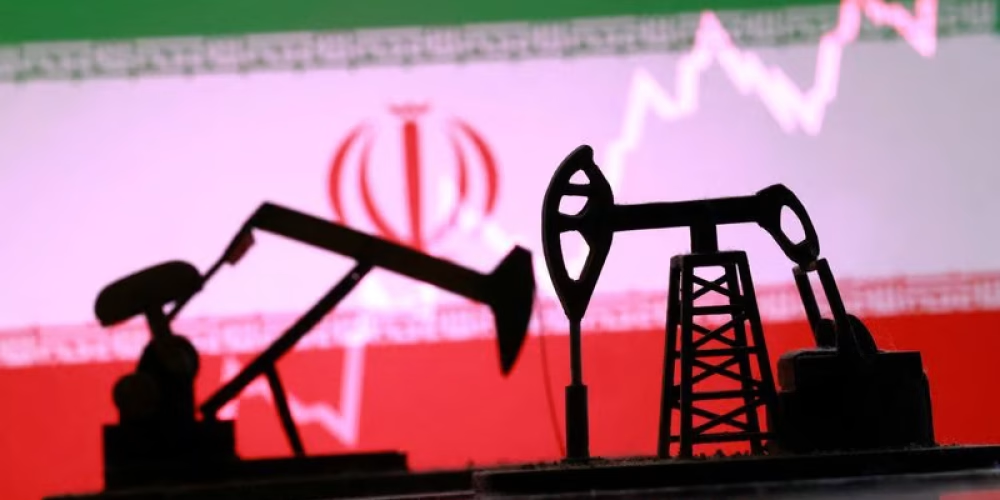
- International crude oil prices surpassed $114 per barrel following a significant widening of the military conflict involving Iran.
- The travel industry faces immediate pressure as jet fuel surcharges and transportation costs rise in response to energy market volatility.
- Analysts warn that a prolonged disruption in the Strait of Hormuz could lead to record-breaking fuel prices for global commuters and airlines.
The international travel and aviation sectors are bracing for a period of intense financial turbulence as global crude oil prices hit their highest levels in years. On Monday, the cost of Brent crude surged past the $114 mark, a direct reaction to the rapid escalation of the war in the Middle East. As the conflict expands to involve more regional actors and threatens vital shipping lanes, energy markets have entered a state of high alert, triggering fears of a sustained supply crunch that could reshape the cost of global mobility.
For the airline industry, which is still navigating a complex post-pandemic recovery, the timing of this price spike is particularly challenging. Fuel typically accounts for nearly a quarter of an airline’s operating expenses. With crude prices climbing at this velocity, many carriers are expected to reintroduce or increase fuel surcharges on long-haul tickets. Travelers planning summer vacations may find that previously quoted fares have risen significantly as airlines pass these increased energy costs directly to consumers to protect their profit margins.
The geographical center of the concern remains the Strait of Hormuz, a narrow waterway through which approximately one-fifth of the world’s total oil consumption passes daily. Military activity in and around this chasm has led to insurance premiums for tankers skyrocketing, with some shipping companies opting for longer, more expensive routes around the Cape of Good Hope. These logistical detours not only delay the delivery of crude but also increase the carbon footprint and operational costs of maritime transport, further fueling inflationary pressures.
Beyond aviation, the impact is being felt across the broader tourism landscape. Ground transportation providers, including car rental agencies and tour bus operators, are already adjusting their pricing models to account for higher at-the-pump costs. In regions heavily dependent on fly-in tourism, such as parts of Africa and Southeast Asia, local operators worry that the combined cost of expensive flights and pricier local transport may deter international visitors, potentially stalling regional economic growth.
Investment analysts suggest that the current market volatility is driven as much by uncertainty as by actual supply interruptions. The “fear premium” currently baked into oil prices reflects the risk of a total regional blockade or damage to critical energy infrastructure in the Persian Gulf. While some oil-producing nations have signaled a willingness to increase output to stabilize the market, the technical reality of ramping up production takes time—a luxury the global travel industry may not have if the conflict continues to broaden.
The cruise ship industry is also monitoring the situation with extreme caution. Like airlines, large passenger vessels consume massive quantities of fuel. Companies that had not hedged their fuel costs at lower prices earlier in the year are now particularly vulnerable. Some lines have already begun notifying passengers of potential itinerary changes to avoid high-risk waters, a move that complicates logistics and can lead to expensive cancellations or refunds.
As the diplomatic and military situation remains fluid, travel experts recommend that consumers book their upcoming trips sooner rather than later to lock in current rates. The consensus among energy economists is that unless a significant de-escalation occurs shortly, the era of relatively affordable fuel may be coming to an end. For now, the world watches the Middle East not just for the geopolitical implications, but for the direct impact on the cost of connecting people and goods across the globe.