KEY POINTS
- Intense gale-force winds across Lake Michigan have generated massive waves that are currently engulfing the historic St. Joseph North Pier Lighthouse.
- The surge is part of a broader winter weather pattern bringing heavy lake-effect snow and hazardous conditions to Michigan’s western coastline.
- Local officials have issued safety warnings, urging spectators to maintain a safe distance from piers and breakwaters during the peak of the storm.
The shoreline of Lake_Michigan has become a theater of raw natural power as a significant winter storm moves through the Great Lakes region. In Saint Joseph, Michigan, the iconic North Pier Lighthouse is currently being battered by a series of massive waves that are easily cresting over the structure’s 35-foot height. This dramatic display of aquatic force is the result of sustained northwesterly winds reaching speeds of over 50 miles per hour, creating a long “fetch” across the open water that allows waves to build to dangerous heights before crashing into the shore.
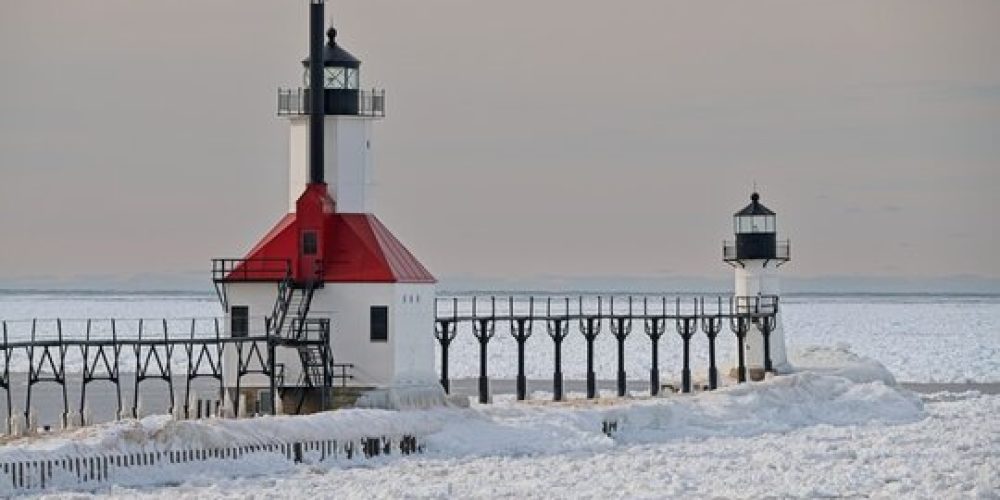
Eyewitnesses and weather spotters have captured stunning footage of the emerald-colored water exploding into white spray upon contact with the concrete pier. While the lighthouse is designed to withstand such maritime stress, the sheer volume of water currently moving over the structure is unusual even for a Michigan winter. The spray is instantly freezing upon contact with the lighthouse’s iron exterior and the surrounding railings, creating a thick, jagged coating of ice that adds thousands of pounds of weight to the historic landmark.
This surge is inextricably linked to the “lake-effect” weather systems that have dominated the Midwest throughout February 2026. As frigid Arctic air flows over the relatively warmer, unfrozen waters of Lake Michigan, it picks up moisture and heat, which then falls as intense snow squalls on the eastern shore. These systems are often accompanied by rapid drops in visibility and high-velocity wind gusts, making the lakefront a beautiful but deadly environment for the unprepared.
The Michigan Department of Natural Resources and local law enforcement have ramped up patrols near popular lakefront access points. They are reminding the public that piers become incredibly slick and unstable during these events. A single wave can easily sweep a person into the turbulent, near-freezing water, where survival times are measured in minutes. Despite the warnings, the spectacular nature of the waves continues to draw photographers and storm chasers to the region, seeking to document the Great Lakes’ seasonal power.
Beyond the visual spectacle, the heavy wave action has practical implications for coastal erosion and infrastructure. The constant pounding of multi-ton walls of water can accelerate the degradation of concrete piers and affect the sandy bluffs that protect inland properties. Engineers monitor these events closely to assess the integrity of the state’s maritime navigational aids, which remain essential for commercial shipping vessels that still navigate the lakes during the winter months.
Meteorologists expect the high wave activity to persist as long as the temperature gradient between the air and the water remains high. As the storm system eventually moves toward the East Coast, the winds are projected to shift, offering a temporary reprieve for the coastal communities. Until then, the St. Joseph lighthouse remains a lonely sentinel, standing firm against the relentless white walls of the Lake Michigan surf.
The 2026 winter season has been particularly active for the Great Lakes, with record-breaking snow totals in neighboring states and frequent gale events. This latest surge serves as a powerful reminder of the inland seas’ capability to mirror the intensity of the open ocean. As the ice continues to build on the lighthouses of Lake Michigan, they transform into “ice cathedrals,” a seasonal phenomenon that has become a symbol of the region’s rugged beauty and the enduring strength of its coastal defenses.