KEY POINTS
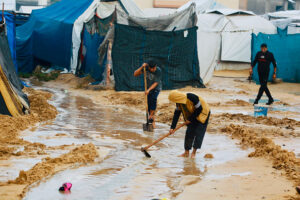
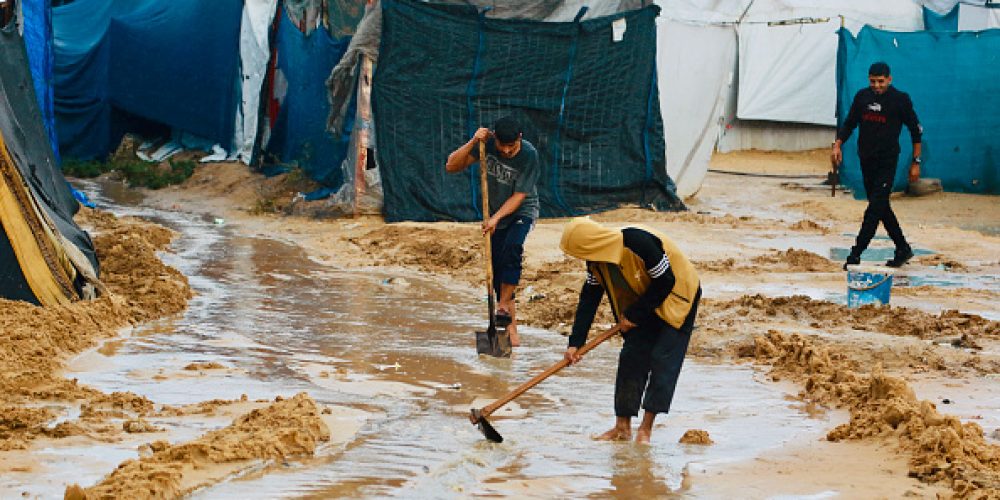
- Severe winter storms have flooded thousands of temporary shelters in Gaza, forcing displaced families to contend with freezing water and mud inside their tents.
- The humanitarian crisis coincides with the first days of Ramadan, leaving many families without dry places to sleep or prepare their pre-dawn and sunset meals.
- Relief organizations warn that the combination of extreme cold, lack of proper drainage, and continuous displacement is rapidly deteriorating public health conditions.
Palestinian families living in makeshift displacement camps across Gaza are facing a dire new challenge as the first major winter storm of the season coincides with the beginning of Ramadan. Torrential rains and powerful winds have battered the region, causing widespread flooding in areas already struggling with overcrowded conditions and a total lack of permanent infrastructure. For thousands of people living in thin plastic and fabric tents, the holy month has begun not with the usual communal celebrations, but with an exhausting battle against rising waters and freezing temperatures.
The flooding has turned displacement sites into muddy quagmires, with water seeping into living areas and soaking through mattresses, blankets, and stored food supplies. Many families reported waking up in the middle of the night to find their children submerged in several inches of cold rainwater. Without proper sewage systems or drainage, the floodwaters often mix with waste, creating a significant health hazard for a population that is already physically weakened by months of restricted access to food and medicine.
The timing of the storm is particularly difficult for those observing Ramadan. The holy month is traditionally a period of fasting, reflection, and family gatherings, but the current environmental conditions have made even basic religious observance nearly impossible. Preparing suhoor (the pre-dawn meal) and iftar (the sunset meal) has become a secondary concern for many who are instead focused on bailing out water or attempting to secure their tents against the wind. The lack of dry fuel or electricity means that many families are unable to cook warm food or heat their shelters.
Humanitarian workers on the ground describe the situation as a “crisis within a crisis.” While aid organizations are attempting to distribute waterproof tarps and warm clothing, the scale of the flooding far exceeds current resources. Most displaced people have already been moved multiple times, and their makeshift shelters are simply not built to withstand a winter storm. In many cases, the tents are located in low-lying coastal areas or on uneven terrain where rainwater naturally pools, making them especially vulnerable to flash floods.
The psychological toll on the population is immense. After months of conflict and repeated displacement, the destruction of their only remaining form of shelter has left many with a profound sense of despair. Parents described the heartbreak of being unable to provide a dry or warm environment for their children, many of whom are already suffering from respiratory infections and skin conditions exacerbated by the damp and cold.
As the storm continues, there are growing calls for an immediate increase in humanitarian access to provide more robust winterization materials. International relief agencies emphasize that the current shelters were always meant to be temporary, and the transition into winter requires a significantly higher level of logistical support. Without a cessation of the underlying conflict and a massive influx of aid, the cycle of displacement and weather-related suffering is expected to worsen as more storms are forecasted for the coming weeks.