KEY POINTS
- The World Food Programme (WFP) has warned that life-saving food and nutrition assistance in Somalia may completely stop by April 2026 due to a severe funding shortfall.
- Currently, 4.4 million people—roughly one-quarter of the population—face crisis-level food insecurity, with nearly one million people experiencing severe hunger.
- Humanitarian operations have already been drastically scaled back, with the number of people receiving aid dropping from 2.2 million to just 600,000 in early 2026.
The United Nations’ World Food Programme (WFP) has issued a dire warning regarding an impending humanitarian catastrophe in Somalia. According to a report published on February 20, 2026, the agency’s emergency food and nutrition operations are on the brink of collapse. If immediate funding is not secured, all life-saving assistance could come to a halt by April. This potential suspension of aid comes at a time when Somalia is grappling with one of its most complex hunger crises in decades, exacerbated by two consecutive failed rainy seasons and ongoing regional conflict.
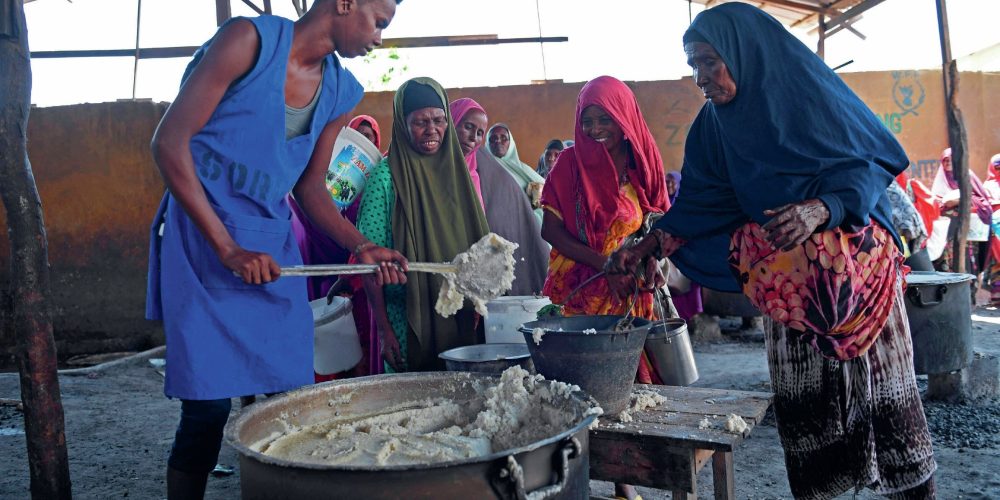
The scale of the need is staggering, with WFP data indicating that 4.4 million people in Somalia are currently living with crisis-level food insecurity. Among them are nearly one million individuals, primarily women and children, who are suffering from severe hunger. Despite the escalating need, a sharp drop in international humanitarian funding has forced the WFP to make impossible choices. The agency has already slashed its assistance coverage, meaning it can now only support one in every seven people who desperately require food aid.
The impact of these cuts is already being felt in the country’s nutrition programs. Last October, the WFP was assisting nearly 400,000 pregnant women, breastfeeding mothers, and young children; by December, that number had plummeted to just 90,000. Ross Smith, WFP’s director of emergency preparedness and response, emphasized that the situation is “deteriorating at an alarming rate.” He warned that if the remaining assistance ends, the resulting humanitarian, security, and economic consequences would be devastating, with ripple effects felt far beyond Somalia’s borders.
Medical organizations are echoing these concerns. Doctors Without Borders (MSF) recently reported a worrying spike in preventable diseases among children, including severe acute malnutrition, measles, diphtheria, and acute watery diarrhea. These health crises are directly linked to the lack of adequate nutrition and clean water, as families are pushed to the brink of survival. Somalia remains one of the most climate-vulnerable countries in the world, frequently alternating between extreme droughts and catastrophic flooding that destroy crops and livestock.
The WFP is calling on the international community for an urgent injection of funds to avert a widespread famine. Without immediate action, the most vulnerable segments of the population—those already weakened by years of instability and environmental shocks—will be left without any safety net. The agency stressed that we are at a “decisive moment,” where the window for intervention is rapidly closing before a full-scale humanitarian collapse becomes inevitable by the spring.