KEY POINTS
- Chongqing’s unique geography forces a vertical urban layout where buildings often feature multiple ground-floor entrances.
- Iconic infrastructure like the Liziba monorail passes directly through residential high-rises to navigate the steep terrain.
- The city blends ancient stilt-house traditions with futuristic skyscrapers, creating a skyline unlike any other on Earth.
Chongqing stands as a sprawling architectural marvel in southwestern China. Known globally as the “Mountain City,” it defies traditional urban planning with its extreme vertical density. The metropolis sits at the confluence of the Yangtze and Jialing Rivers. Its rugged landscape has forced architects to build upward and inward rather than outward. This results in a multi-level urban environment often described as an “8D city” by locals and tourists.
The most striking feature of Chongqing is its complex transportation network. Because the terrain is so steep, roads and railways frequently intersect at different elevations. Visitors often find themselves on a street that is simultaneously the first floor of one building and the tenth of another. One of the city’s most famous sights is the Liziba monorail station. Here, a light rail train glides directly through the middle of a nineteen-story residential complex.
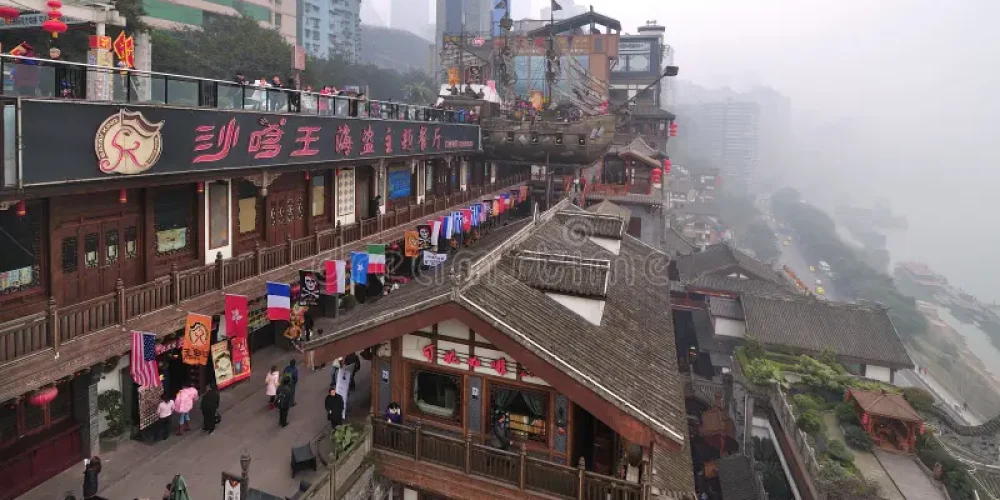
History and modernity coexist in a visual spectacle across the city’s districts. Hongya Cave serves as a prime example of this architectural fusion. This eleven-story complex is built into a cliffside using traditional “diaojiaolou” or stilt-house styles. At night, its golden illumination creates a fairyland atmosphere that contrasts with the nearby Raffles City skyscrapers. These modern towers feature a massive horizontal “skybridge” that connects four buildings at a height of 250 meters.
Navigating the city requires more than just standard cars and buses. Public escalators, funiculars, and the Yangtze River Cableway are essential parts of the daily commute. These tools allow the city’s 32 million inhabitants to bypass the exhausting hills and stairs. Despite the density, the city integrates green spaces and walking trails along its riverbanks. These paths offer residents a quiet escape from the “concrete forest” of the central business districts.
Chongqing’s unique layout also influences its world-famous culinary scene. Thousands of hot pot restaurants are tucked into steep alleys and rooftop terraces. The city’s love for spicy cuisine is even celebrated with a giant chili pepper statue in a public square. This blend of bold flavors, innovative engineering, and dramatic scenery makes Chongqing a fascinating destination. It remains a living laboratory for the future of high-density urban living.