KEY POINTS
- To Lam was unanimously re-elected as the General Secretary of the Communist Party for a full five-year term.
- The leadership pledged to achieve double-digit annual GDP growth through 2030 by modernizing the national economy.
- The new term solidifies To Lam’s reformist agenda, which focuses on cutting red tape and boosting the private sector.
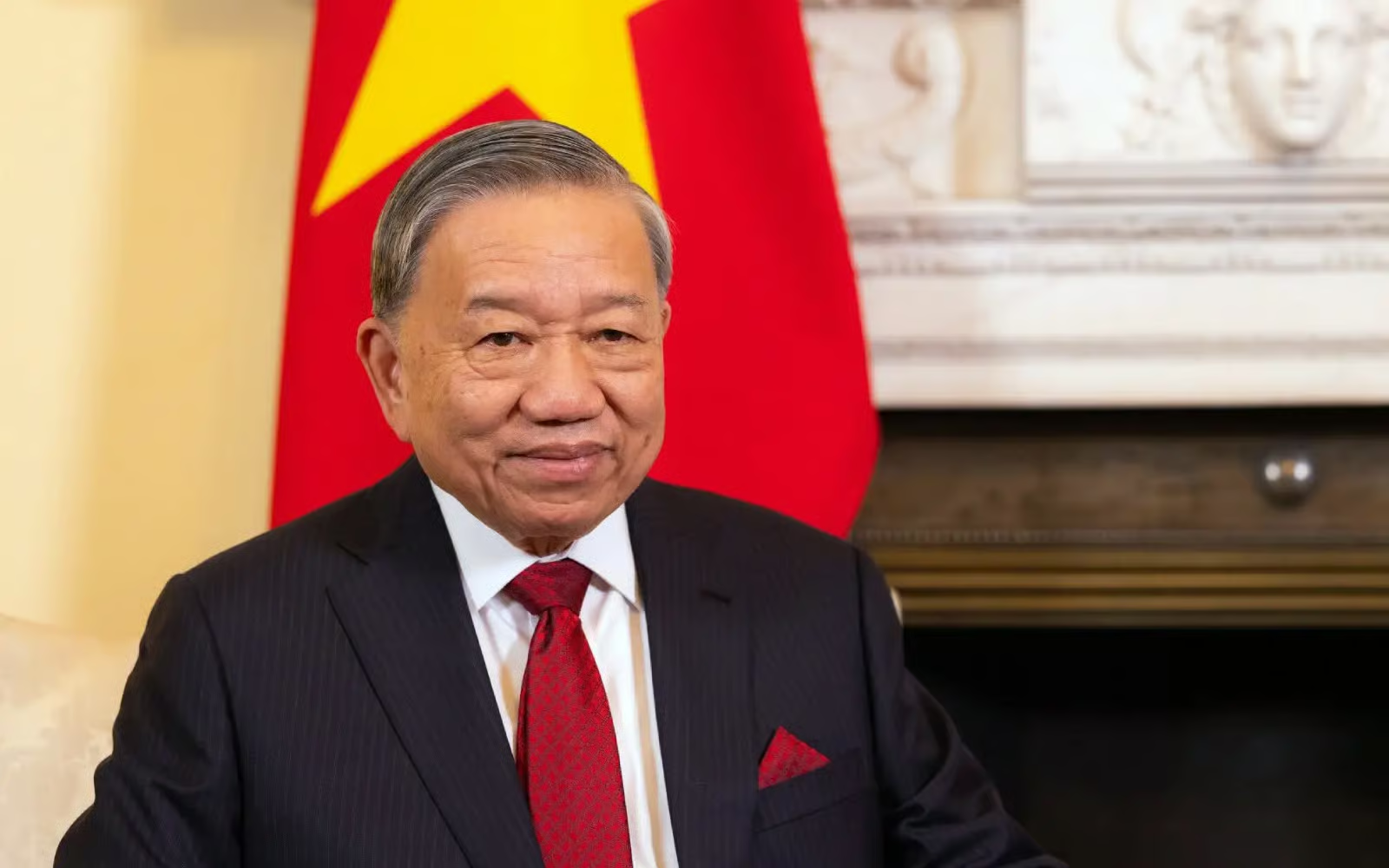
Vietnam’s most powerful political body concluded its quinquennial congress with a resounding vote of confidence in its current leader. To Lam, 68, received unanimous support from the 180-member Central Committee to continue as General Secretary. This reappointment grants him a strong mandate to lead the nation of 100 million people through 2031.
Since taking the helm in mid-2024, To Lam has launched a series of “revolutionary” administrative reforms. He has already eliminated multiple government agencies and streamlined the state payroll by thousands of jobs. His leadership style favors rapid decision-making to help the country keep pace with global technological shifts.
The re-election sends a clear signal to international markets about Vietnam’s future economic policy. To Lam has promised to “turbocharge” growth, targeting an ambitious annual GDP increase of 10% or more. This goal aims to transition the country from a low-cost labor hub into a high-middle-income economy.
To achieve these targets, the party is looking to unleash the potential of private conglomerates. While state-owned enterprises will maintain a “leading role,” the government plans to support “national champions” in technology and manufacturing. This strategy is designed to reduce dependence on foreign investment over the long term.
Infrastructure development remains a top priority for the newly confirmed leadership team. The government plans to significantly increase public spending on massive rail and energy projects. These investments are essential to support the growing electronics and textile industries that drive the nation’s exports.
Despite the focus on growth, To Lam emphasized that the fight against corruption will continue. He told the congress that integrity and competence would be the primary benchmarks for assessing government officials. This stance suggests that the aggressive anti-graft campaign seen in recent years is far from over.
The political structure also saw updates with the appointment of a new 19-member Politburo. This top decision-making body will navigate a complex geopolitical environment as China and the U.S. continue to compete. Vietnam remains committed to its flexible diplomacy to maintain balance between major global powers.
Social stability and party unity were central themes in To Lam’s post-election address. He acknowledged the challenges posed by natural disasters and global supply chain disruptions. By maintaining a unified front, the party aims to preserve its legitimacy through consistent economic delivery.
Observers noted that the leadership transition was meticulously prepared to avoid internal friction. By securing support from various factions, including the military, To Lam has centralized authority to a degree rarely seen. This consolidation is intended to prevent the bureaucratic gridlock that has slowed past projects.
As the new term begins, the focus shifts to the practical implementation of these high-level goals. The world will be watching to see if Vietnam can sustain such rapid growth while navigating climate and demographic risks. For now, the nation remains on a path of centralized, pro-growth reform.