Key Points:
- Subsidy Cuts: Major routes like Paris-Berlin and Paris-Vienna were axed following the withdrawal of French government funding amid a national budget crisis.
- Economic Imbalance: High track access charges and VAT on international rail—exempt for aviation—make it nearly impossible for trains to compete with budget airlines on price.
- Infrastructure Hurdles: Severe construction work in Italy and Sweden, along with a lack of modern rolling stock, has forced the suspension of popular holiday routes.
The “golden era” of night trains seemed to be returning just years ago, but 2026 is proving to be a wake-up call for the industry. The most high-profile casualty is the Nightjet service connecting Paris to Berlin and Vienna. Launched with great fanfare as a symbol of European connectivity, the routes were scrapped in late 2025 and early 2026 after France pulled its financial support.
Running a night train is significantly more expensive than a daytime service. Sleeper carriages carry fewer passengers per car, require more staff for overnight service, and must pay heavy “track access charges” for every kilometer traveled. Without government subsidies, operators like Austria’s ÖBB and France’s SNCF claim these routes simply cannot remain profitable.
The competition with budget airlines remains the biggest obstacle to growth. While aviation fuel is often tax-exempt and international flights avoid VAT, rail travel is burdened by both. This creates an uneven playing field where a flight across the continent can cost less than a single night in a shared train couchette.
Infrastructure issues are also playing a major role in the disappearing routes. In Italy, extensive track maintenance has forced the suspension of the popular “Liguria” route from Vienna to La Spezia. Similarly, in Sweden, the state-owned SJ nearly withdrew from the Berlin-Stockholm line due to expiring subsidies before a private operator stepped in to save a reduced version of the service.
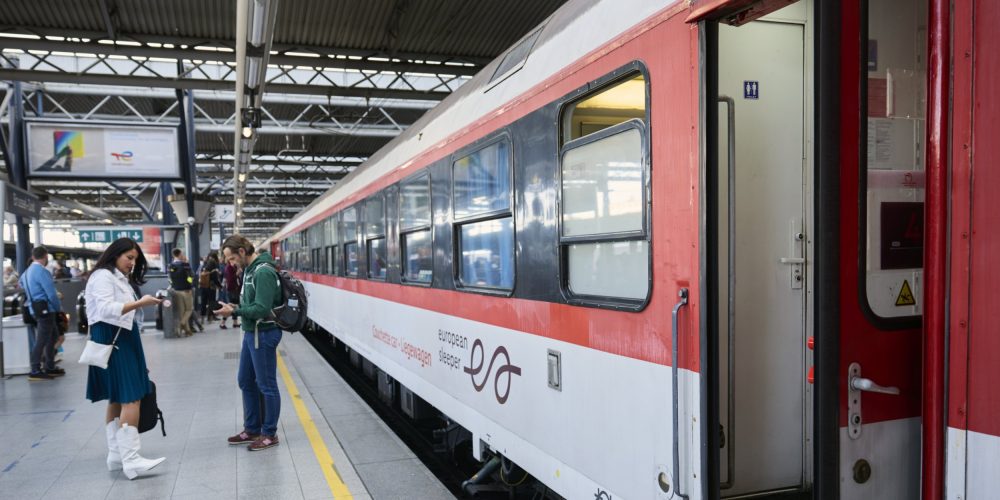
However, the news is not entirely bleak for rail enthusiasts. The private sector is beginning to fill the gaps left by national carriers. Startups like European Sleeper are planning to revive the Paris-Berlin connection in March 2026 using a “share-funding” model. These private ventures hope that high demand will eventually make the routes self-sustaining without state help.
To ensure a long-term future, campaigners argue that the European Union must intervene with a unified strategy. This would include lowering track fees for night services and standardizing technical requirements across borders. Currently, differing track gauges and signaling systems make cross-border travel a logistical nightmare for operators.
Investment in “rolling stock”—the actual train cars—is another critical bottleneck. Most night trains currently in use date back to the 1970s and 80s. While ÖBB is spending €500 million on a new generation of high-tech Nightjets, the pace of manufacturing cannot keep up with the public’s desire to travel.
Ultimately, the future of Europe’s night trains rests on political will. While citizens are eager to swap planes for pillows, the math only works when governments prioritize the climate over the bottom line. Whether 2026 is a setback or a turning point depends on how firmly leaders commit to keeping the rails open.