Key Points:
- Nvidia CEO Jensen Huang will headline CES 2026 as competition in AI chips intensifies.
- Rivals push new processors targeting data centers, PCs, and artificial intelligence workloads.
- Nvidia aims to defend its market lead while signaling its next phase of innovation.
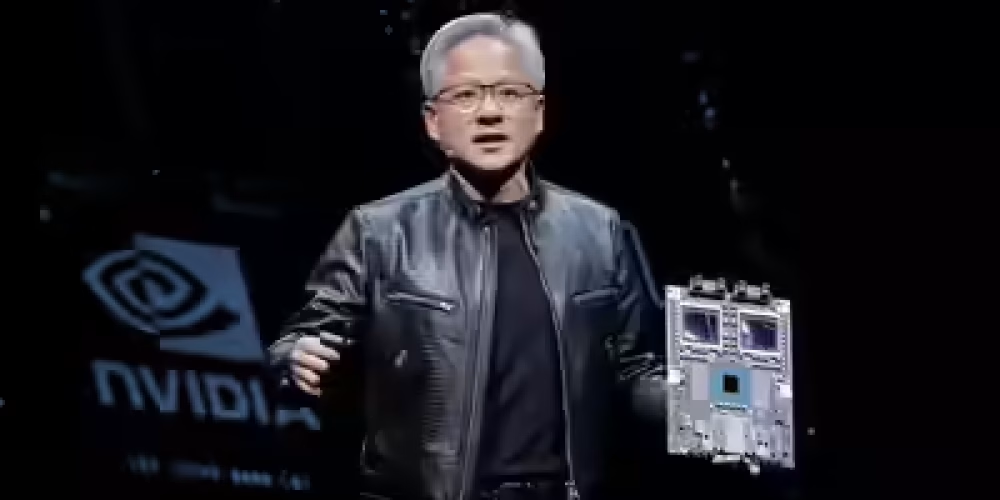
Nvidia chief executive Jensen Huang is set to command attention at CES 2026 in Las Vegas, a moment that arrives as competition in artificial intelligence hardware accelerates. The annual technology showcase offers Nvidia a global stage to reinforce its leadership narrative. Investors, partners, and rivals closely watch Huang’s remarks for signals about Nvidia’s strategic direction.
Nvidia built its dominance by supplying powerful chips that train and run advanced AI systems. These processors became essential for data centers powering chatbots, image generators, and complex analytics. However, rivals now challenge Nvidia’s position by launching alternative chips that promise improved efficiency, lower costs, or specialized performance tailored to AI tasks.
Several competitors target the same customers that fueled Nvidia’s growth. Established semiconductor firms and emerging startups push new designs aimed at cloud providers and enterprise buyers. These challengers highlight supply stability, pricing flexibility, and energy efficiency as selling points. Their advances raise questions about how long Nvidia can maintain its commanding market share.
Huang’s CES appearance comes at a time when investors expect clarity. Nvidia’s stock surged in recent years as demand for AI hardware exploded. Yet valuation pressures increased as markets weighed how fast competitors could narrow the technology gap. Huang’s message may shape confidence around Nvidia’s ability to innovate faster than rivals.
At CES, Nvidia often unveils new products or platforms that set industry benchmarks. Observers expect updates on next-generation chips designed for AI workloads beyond data centers. These may include processors optimized for personal computers, autonomous systems, or edge computing. Expanding into new segments helps Nvidia diversify revenue and reinforce its ecosystem.
Competition also intensifies due to geopolitical and supply chain pressures. Restrictions on advanced chip exports and regional manufacturing shifts influence how companies plan growth. Nvidia navigates these challenges while balancing relationships with governments and global customers. Strategic clarity at CES could reassure markets about Nvidia’s resilience amid regulatory uncertainty.
Industry analysts note that competition benefits customers but squeezes margins. As alternatives improve, buyers gain leverage to negotiate prices and diversify suppliers. Nvidia counters this pressure by emphasizing software integration and developer tools. Its platforms often lock customers into long-term ecosystems that extend beyond raw hardware performance.
Huang’s leadership style plays a role in Nvidia’s public image. Known for bold predictions and technical depth, he often frames Nvidia as an innovation engine shaping the future of computing. His CES presence reinforces that identity, especially as rivals seek visibility and credibility in AI markets.
The broader technology sector watches closely because Nvidia’s trajectory influences investment trends. AI spending shapes capital flows across chips, cloud services, and software. Signals from CES may guide how companies and investors allocate resources during the next phase of AI expansion.
As CES unfolds, Huang’s keynote will test Nvidia’s ability to defend its narrative amid mounting competition. Whether through product announcements or strategic vision, Nvidia aims to convince the industry that it remains the central force in artificial intelligence hardware. The stakes remain high as rivals continue to close the gap.