Key Points:
- Karl Bushby’s decades-long Goliath Expedition reshaped his view of happiness.
- He learned that human connections and relationships matter more than achievement alone.
- The kindness of strangers sustained him through extreme hardship and isolation.
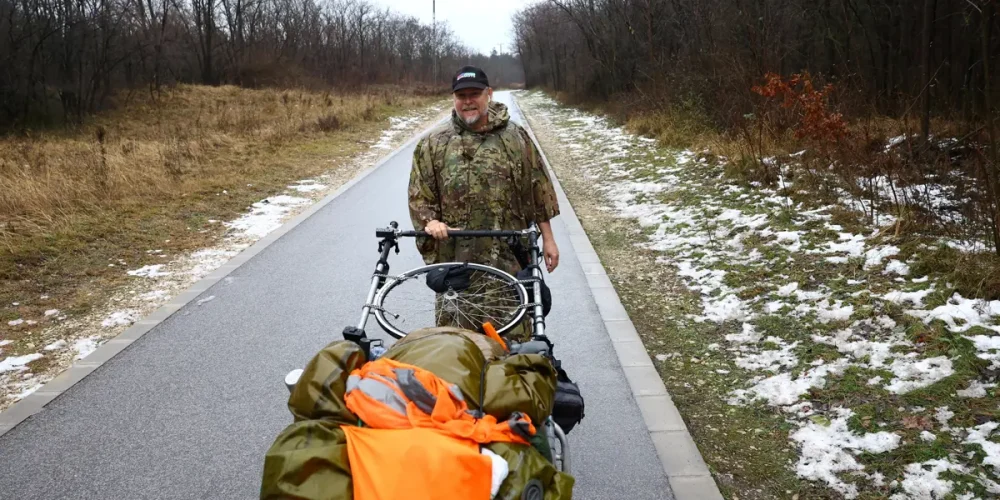
Karl Bushby has spent nearly three decades walking across the globe without using vehicles, driven by a singular ambition. His journey, known as the Goliath Expedition, began in 1998 with just $500 and little more than an idea drawn on a map. Since then, he has covered tens of thousands of miles on foot, pushing into more territory than many explorations in human history.
Bushby’s trek started in Punta Arenas, Chile, the furthest point from his English hometown that one can reach without a boat or plane. He committed to two rules: no transport of any type, and no returning home until he arrives on foot. These principles created an almost monastic discipline, forcing him to confront every challenge without shortcuts.
Over the years, he has endured perilous jungle passages, icy deserts, and geopolitical obstacles. He crossed the notorious Darién Gap, was jailed once in Panama and detained by Russian authorities, and even swam for more than a month across the Caspian Sea to avoid dangerous routes. Each trial tested his stamina, resolve, and belief in the mission’s meaning.
From the outset, Bushby expected the journey to take about a decade. Instead, it stretched into nearly 30 years. Visa delays, wars, pandemics and financial challenges repeatedly forced him off his intended route and into long pauses. Despite mounting obstacles, he always returned to the exact point where he had stopped, a testament to his unwavering commitment.
What Bushby found was not just a test of physical endurance, but a deep lesson about life and happiness. Early on, he expected the hardest moments to be the dangers of trekking or the elements. Instead, it was the emotional toll of long separations and lost relationships that left the deepest imprint. The intensity of life lived on the road demanded sacrifices that reshaped his view of closeness and fulfillment.
Equally important were the connections he formed along the way. Bushby has spoken often about the overwhelming generosity of strangers from every culture he encountered. Time and again, people offered him shelter, food, medical help or simple companionship without expecting anything in return. These moments of kindness became central to his sense of purpose and happiness.
Bushby also discovered that happiness is not found in reaching a distant goal alone. Rather, it grows from shared experiences, mutual support and the empathy of others. He repeatedly emphasised that no one truly achieves great things entirely alone. Even when alone on the trail, he felt supported by the invisible network of helpers he met along his route.
Today, with less than 2,000 miles left to reach his hometown of Hull, England, Bushby reflects on a lifetime of walking with gratitude. He hopes to inspire others to embrace challenge, compassion and connection. His story offers a powerful reminder that human kindness and shared connection can be the most profound sources of happiness in life—greater even than the fulfillment of extraordinary goals.