Key Points
- Scholz urged European unity to safeguard peace and economic resilience.
- He highlighted the need for strategic autonomy alongside multilateral cooperation.
- Strengthened defense and economic policies underpin Europe’s global role.
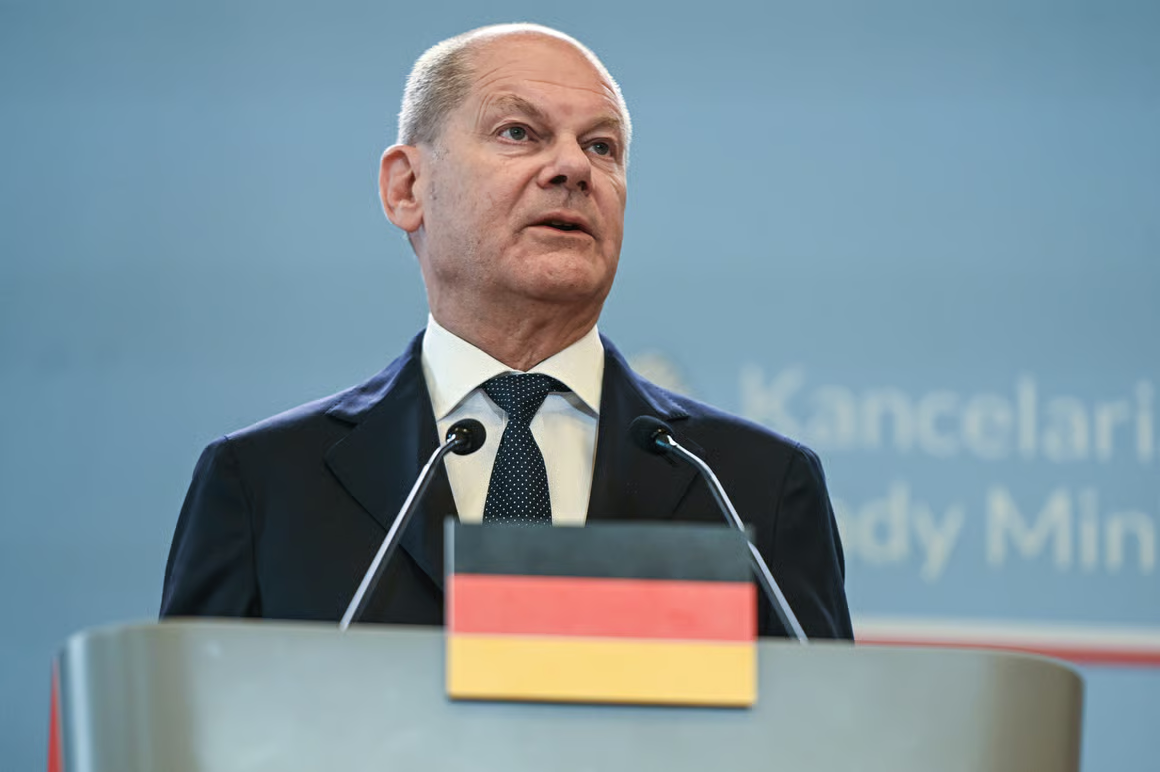
German Chancellor Olaf Scholz called on European nations to act with greater resolve to protect peace and prosperity amid rising global tensions. Speaking at a major forum in China, Scholz emphasized that Europe must remain united and assertive in its diplomatic and economic strategies. He linked unity with stability in an increasingly complex world.
Scholz noted that Europe cannot depend solely on external powers to guarantee its security. He argued that shared challenges require shared responsibility among European states. The chancellor stressed that strong, coordinated policies can deter conflict and secure prosperity for all member nations. His remarks reflect rising concern over geopolitical friction and economic competition.
The German leader reaffirmed support for multilateral engagement while also advocating for enhanced European autonomy. He said that Europe should uphold international law and work with global partners on shared goals. Still, Scholz reinforced the need for Europe to protect its economic interests and strategic sectors against external pressures.
Scholz’s speech comes at a time of heightened geopolitical tension involving major powers like the United States, China, and Russia. Europe, with its diverse political and economic landscape, faces the challenge of balancing its alliances with the need to chart an independent path. Berlin’s stance signals an effort to strengthen Europe’s global role.
Economic security featured prominently in Scholz’s address. He warned that protecting prosperity requires resilient economies, innovation, and fair trade. Europe must invest in critical technologies and diversify supply chains to reduce vulnerability to geopolitical shifts. He emphasized that economic strength underpins the continent’s ability to influence global affairs.
Scholz acknowledged the importance of cooperation with China on trade and climate issues. However, he urged vigilance against unfair practices and urged Europe to prioritize its own competitiveness. The chancellor’s remarks underscored the delicate task of engaging with China while defending European strategic interests.
Scholz also touched on security cooperation within the European Union. He encouraged member states to bolster defense collaboration and strengthen ties with NATO partners. Shared training, joint procurement, and coordinated strategy can enhance collective security. These measures would help ensure Europe can respond swiftly to emerging threats.
The chancellor’s message reflects growing debates in European capitals about strategic autonomy. Some leaders favor deeper integration and shared defense budgets. Others focus on national sovereignty. Scholz’s call for unity aims to bridge these views and promote a cohesive strategy that aligns with both security and economic interests.
His address also highlighted the interplay between peace and prosperity. European nations, he said, must maintain internal cohesion and project stability abroad. This dual focus supports conflict prevention and sustainable growth, particularly as Europe navigates competition in technology, trade, and diplomacy.
Scholz’s remarks indicate a broader shift in Europe toward a more self-reliant stance. By speaking in China, he signaled that Europe seeks engagement but not dependency. His message underscores the continent’s desire to shape global norms while protecting its interests in an unpredictable international environment.
The chancellor’s call resonated with business and political leaders who see economic strength as inseparable from security. Moving into 2026, Europe’s leaders may increasingly pursue policies that balance diplomatic cooperation with assertive defense of economic and strategic priorities.