

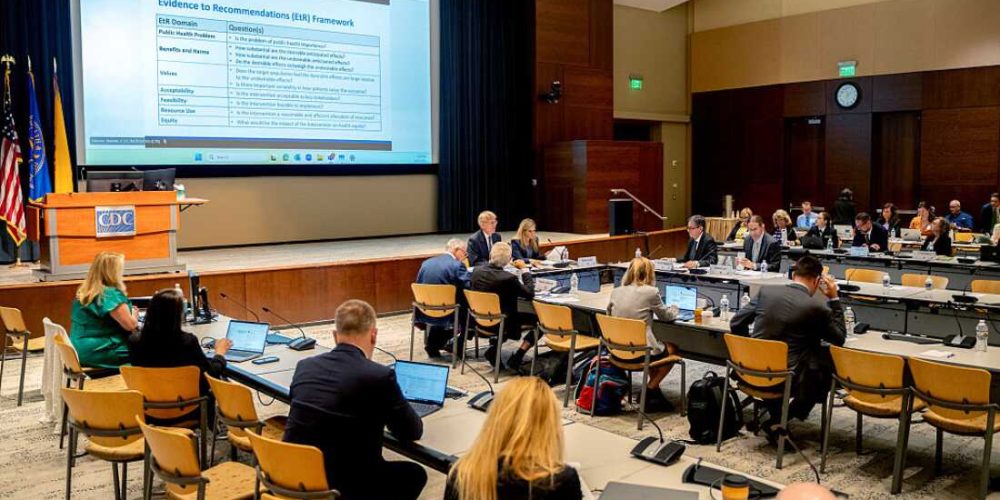
The federal vaccine advisory committee reshaped by US Health Secretary Robert F. Kennedy Jr. will meet this week under a new chair, marking another major change in vaccine policy leadership. Officials announced that Martin Kulldorff, who has led the committee since Kennedy dismissed the previous members, will step down to take a senior position within the Department of Health and Human Services.
His replacement, Dr. Kirk Milhoan, is a pediatric cardiologist who has publicly suggested vaccines may increase cardiovascular disease in young people. He joined the panel in September and will oversee upcoming discussions on the US pediatric vaccine schedule, including a vote that could alter recommendations for hepatitis B shots given to newborns.
The Advisory Committee on Immunization Practices, traditionally advises the director of the Centers for Disease Control and Prevention on how approved vaccines should be used. For decades, its recommendations shaped national vaccination programs and were widely followed by physicians. Kennedy’s arrival led to a dramatic departure from this system.
Months later, it recommended restricting a vaccine that protects against chickenpox and measles-related diseases. The group also declined to recommend Covid-19 vaccination for any age group, turning it into a personal decision even for seniors.
Major medical experts condemned the changes, saying they ignored scientific evidence and threatened public health. They urged doctors to continue following previous CDC guidance rather than the new recommendations.
Kulldorff’s exit leaves 11 members on the committee and coincides with a planned vote on whether newborns should continue receiving a hepatitis B shot within 24 hours of birth. The current schedule has been in place since 2005 and is credited with dramatically reducing chronic infections. Studies show that early vaccination prevents illness in up to 95% of infants, and experts say no credible data reveals safety concerns.
HHS has not clarified what changes are being considered, prompting uncertainty ahead of the meeting. Governors from 15 states submitted public comments warning that the committee’s actions could weaken trust in vaccines and reduce access to affordable immunization programs.
The hepatitis B virus can spread from infected mothers to newborns, and most infants who catch it develop chronic disease that lasts a lifetime. While adult infections often result from sexual contact or injection drug use, pediatric infections historically accounted for long-term complications before widespread vaccination.
Kulldorff will now serve as chief science officer within an HHS planning office described as an internal research center. His move reflects another shift in federal vaccine oversight at a time when health leaders say stability and evidence-based policy are critical. Critics argue that rapid restructuring risks unraveling decades of progress in reducing preventable diseases.
As the committee meets in Atlanta, public health organizations are watching closely, uncertain whether upcoming votes will maintain long-standing protections or further disrupt vaccine policy. Regardless of the outcomes, the decisions made this week will have sweeping implications for pediatric care, public confidence, and national immunization strategy.









