

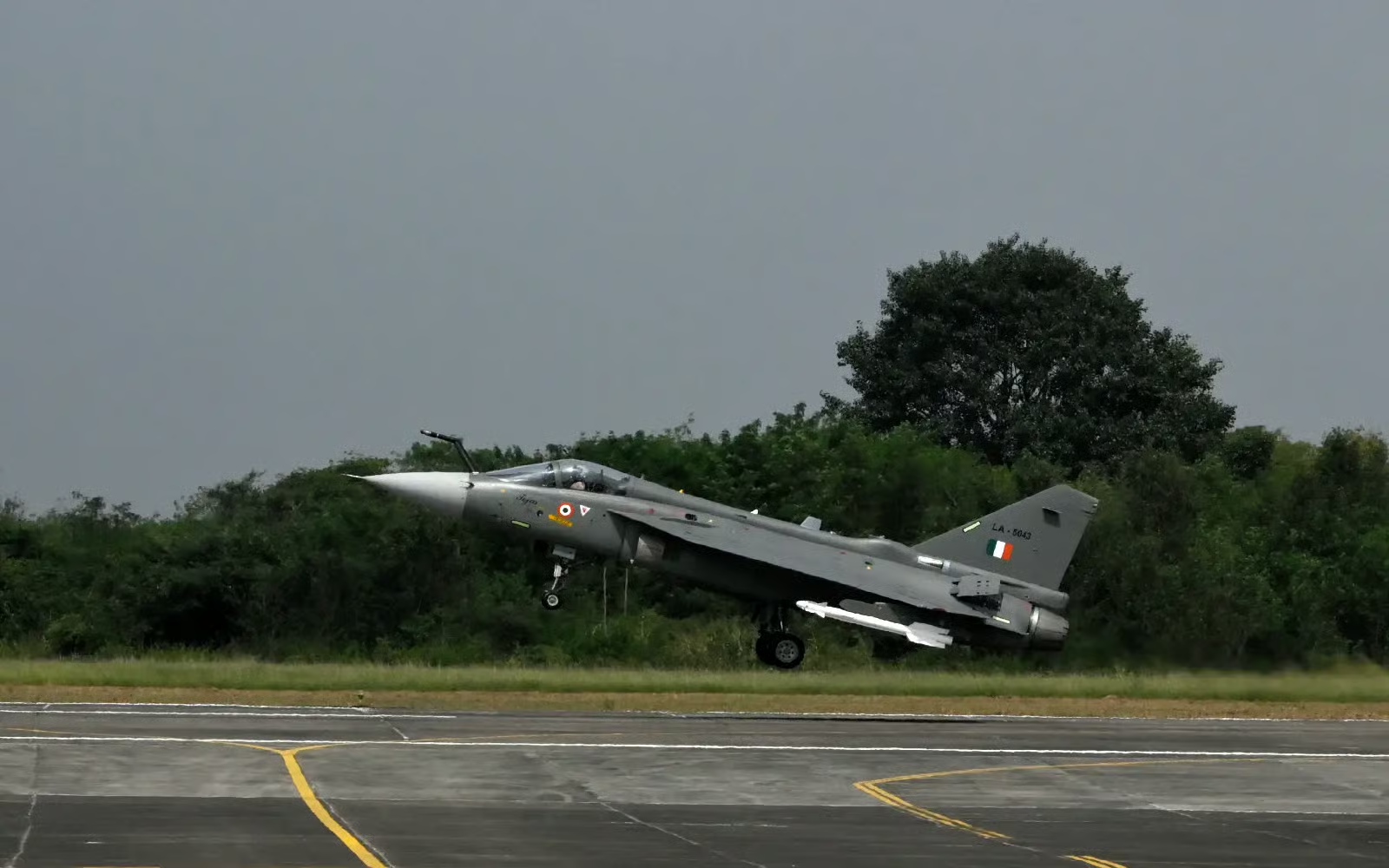
A public crash involving India’s domestically built Tejas fighter jet during the Dubai Airshow has dealt a significant blow to New Delhi’s hopes of exporting the aircraft. The jet went down during a demonstration flight attended by global arms buyers, including representatives from rival Pakistan, leaving analysts concerned about the program’s future on the international market.
The aircraft, developed by state-owned manufacturer Hindustan Aeronautics Ltd (HAL), is central to India’s strategy to reduce dependence on foreign fighters and project defence-industry self-reliance. The program, in the works since the 1980s, was expected to replace decades-old Russian-origin jets in the Indian Air Force.
However, the crash at one of the world’s most prominent air shows came at an awkward time. Displays are meant to showcase a nation’s military-industrial strength, and an in-flight failure can undermine confidence. “The imagery is brutal,” noted a defence analyst speaking about the incident. In the wake of the crash, HAL’s export push to markets in Asia, Africa and Latin America is expected to face delays or tabling.
Complicating matters is the fact that while India has ordered 180 Mk-1A variants of the Tejas, deliveries have yet to begin. The program already suffers from engine-supply bottlenecks with GE Aerospace and concerns about production pacing. Analysts highlight that without a solid export order backing, the aircraft’s success hinges largely on domestic adoption.
Domestic impact is also notable. The IAF currently operates 29 fighter squadrons—well below the approved strength of 42—and faces retirements of older models such as the MiG-29 and Mirage-2000. The Tejas was widely anticipated to fill key squadron gaps, but this crash raises questions about whether it can meet urgent internal needs.
That said, booth-crashing accidents at air shows are not necessarily fatal to defence programs. Historical precedents include the Russian Su-30 and MiG-29 incidents which did not derail subsequent orders. One expert pointed out that while the crash harms perception, the strategic and political decisions behind fighter sales often outweigh single mishaps.
HAL described the crash as an “isolated occurrence” and pledged that it will not affect future production plans or deliveries. Nonetheless, with the incident still under investigation by the Indian Air Force and HAL, transparency and clarity on the root cause will be critical for restoring confidence.
In summary, the Tejas program—the centerpiece of India’s efforts to become a leading defence exporter—now faces a moment of reckoning. Its export ambitions appear to be on hold, and domestic expectations have grown even more precarious. The industry will now watch closely to see whether this setback can be managed and whether the aircraft can regain credibility both at home and abroad.
Read More : Global Scrutiny Intensifies as Indian Cough Syrup Failures Expose Deadly Safety Gaps









