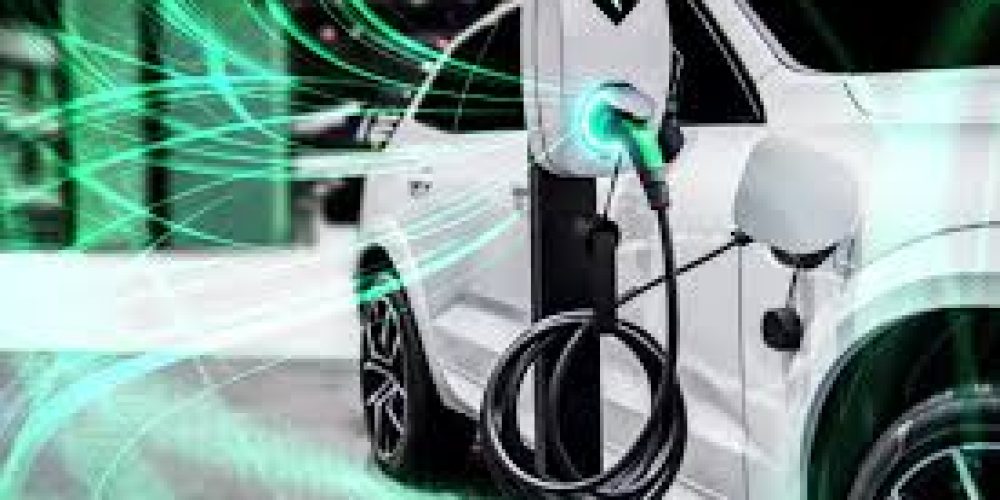
Washington, D.C. — Electric vehicle (EV) sales in the United States have reached record highs, but the industry’s rapid growth may be short-lived as key government incentives come to an end.
More than 1.2 million battery-powered cars were sold in the U.S. last year — over five times the number sold four years earlier. Hybrid vehicle sales have also tripled in the same period. According to S&P Global Mobility, EVs made up 10% of all new car sales in August, marking a historic milestone for the U.S. auto market.
Automakers including Tesla, Ford, and General Motors reported record electric sales in recent months, offering a bright spot amid broader economic challenges such as high interest rates, inflation, and consumer uncertainty.
However, analysts warn that much of the recent surge was driven by a rush to buy before the expiration of a $7,500 federal tax credit that made certain electric, hybrid, and fuel-cell vehicles more affordable. With the incentive ending in September, industry leaders expect sales to decline.
“It’s going to be a vibrant industry, but it’s going to be smaller, way smaller than we thought,” said Ford CEO Jim Farley.
GM CFO Paul Jacobson added that EV demand is likely to “drop off pretty precipitously.”
Global Comparison
Despite progress, the U.S. continues to trail behind much of the world in electric vehicle adoption. Battery and hybrid vehicles made up nearly 30% of sales in the UK last year, 20% across Europe, and almost half of all new car sales in China, according to the International Energy Agency (IEA).
Some nations, including Norway and Nepal, have achieved even higher rates of EV adoption.
Policy and Political Divide
Analysts attribute the slower U.S. adoption to inconsistent government policies. President Joe Biden has worked to accelerate the transition by tightening emissions rules, investing in EV manufacturing, and expanding the federal tax credit. His goal is for electric vehicles to represent 50% of all U.S. car sales by 2030.
In contrast, Donald Trump has criticized the policies as government overreach. He has sought to roll back environmental regulations and eliminate EV incentives, arguing that consumers should not be “forced” into buying electric cars.
“You can make them, but it’ll be judged by the market,” Trump said earlier this year, after signing legislation to block California’s planned phase-out of petrol-only vehicles by 2035.
Rising Costs and Tariffs
While EV prices have fallen in recent years, they remain about 16% higher than gasoline cars. The average EV price in August was $57,000, according to Kelley Blue Book.
Chinese manufacturers such as BYD, known for affordable electric models abroad, remain largely absent from the U.S. market due to high tariffs supported by both major political parties.
Some automakers are adjusting strategies to maintain sales momentum. Hyundai has pledged to lower prices on its Ioniq range, while Tesla plans to increase lease payments on certain models. Analysts expect most companies to take a cautious pricing approach amid new tariff pressures.
Industry Outlook
Experts predict that the U.S. auto market will face a challenging year ahead. S&P Global Mobility forecasts a 2% decline in overall car sales by 2026, with electric vehicle demand expected to soften most sharply.
“The subsidies were meant to level the playing field,” said Katherine Yusko, research analyst at the American Security Project. “Now that they’re gone, the U.S. has a lot of ground to make up.”
Even so, some analysts argue it’s too soon to declare the U.S. as “falling behind.”
“Whether electric is truly the best long-term solution is still being tested,” said Stephanie Brinley of S&P Global Mobility. “It’s a turning point — but not the end of the story.”