

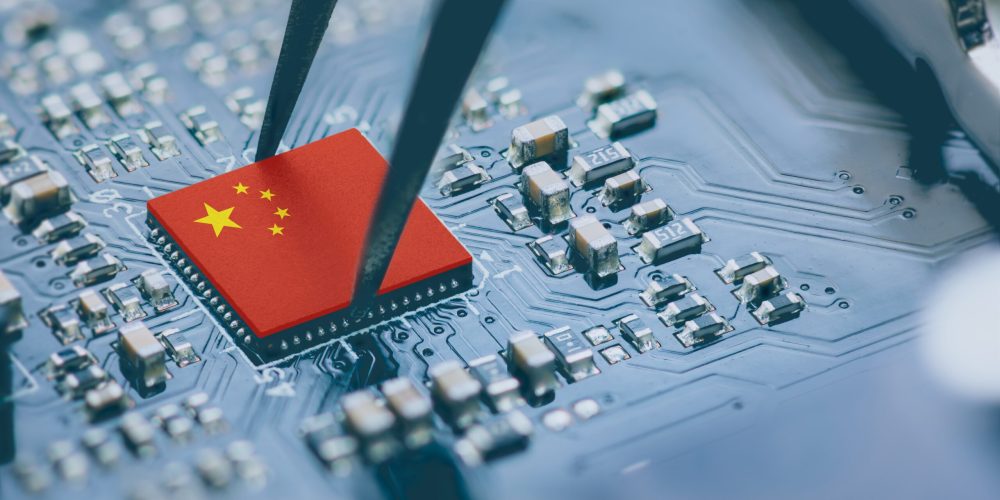
China’s largest technology companies are accelerating plans to train their most advanced artificial intelligence models overseas, a move driven by growing pressure from U.S. export controls and the need for cutting-edge Nvidia chips. According to recent reporting, several major firms—including prominent AI developers and cloud service providers—are setting up offshore operations to secure the hardware and infrastructure they can no longer reliably source at home.
The shift reflects a broader challenge facing China’s AI sector. Washington’s export rules limit Beijing’s access to high-end semiconductors required to develop competitive foundation models. As domestic alternatives remain a work in progress, leading tech players see overseas expansion as the most practical path to sustaining progress in AI research. Countries in Southeast Asia, the Middle East, and parts of Europe are emerging as preferred destinations due to more flexible technology policies and stronger access to advanced computing hardware.
Companies are reportedly leasing foreign data center capacity, investing in local infrastructure, and relocating portions of their engineering teams to these regions. By doing so, they can acquire the Nvidia H-series GPUs that have become the industry standard for training large-scale AI systems. These chips enable faster model development, higher accuracy, and more complex reasoning capabilities, all of which are essential for keeping up with global competitors like OpenAI, Google, and Anthropic.
The move abroad also serves another strategic purpose: mitigating future risk. Chinese firms worry that tightened export controls could further restrict their access to cloud-based AI services or limit long-term supplies of advanced chips. Setting up operations in jurisdictions outside the reach of U.S. regulators provides a buffer against potential disruptions and offers more stable planning for multi-year AI model development cycles.
However, the transition comes with significant challenges. Running training operations overseas increases costs, adds legal complexity, and introduces data-governance concerns. Many countries require strict oversight of sensitive information, and companies must ensure compliance with privacy laws that differ from China’s. There are also technical concerns around latency, cross-border data transfer, and maintaining consistent model performance across distributed infrastructure.
Despite these hurdles, industry observers say the shift is unlikely to slow China’s broader AI ambitions. Instead, it highlights how global the AI race has become. Nations are competing not just on algorithms but also on access to computing power, talent, and strategic partnerships. China’s leading firms appear determined to secure the resources needed to remain major players, even if that means training their most advanced models outside their own borders.
The trend may also influence global geopolitical dynamics. Countries hosting these offshore AI hubs could strengthen ties with Chinese tech companies, increase investment flows, and gain access to emerging AI applications. At the same time, U.S. policymakers may interpret the expansion as an attempt to circumvent export restrictions, potentially prompting even tighter controls.
For now, China’s tech giants are moving quickly to ensure they remain competitive in a field defined by rapid innovation. Their overseas expansion underscores one reality: in the global AI race, access to top-tier chips is just as important as the algorithms themselves.
More News : China’s Deepseek AI Could Integrate with Robot Dogs and Drone Swarms for Next-Gen Warfare









