

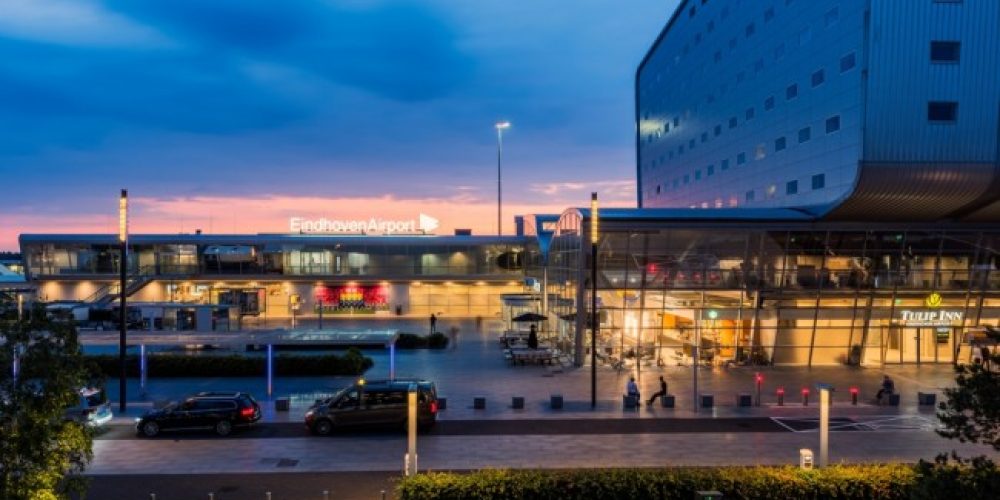
Eindhoven Airport in the Netherlands temporarily suspended all flights on Saturday after drones were spotted near its airspace, prompting immediate security action. The shutdown created travel delays and raised concerns over growing risks posed by unauthorized drones near civilian and military locations.
Dutch Defence Minister Ruben Brekelmans confirmed that officials closed the airport after several drone sightings were reported in the area. Eindhoven Airport operates both commercial flights and military aircraft, which makes drone activity near the site especially dangerous. The minister described the situation as a serious safety issue that required swift intervention.
Authorities reacted quickly once the first drone was detected. Air traffic controllers halted takeoffs and landings to prevent any collision risk. Passengers already on the ground faced delays, while incoming flights were diverted to other airports. The shutdown continued until officials were confident the airspace was clear.
Drone disruptions have become more common at European airports in recent years. These incidents pose major safety hazards because drones can damage aircraft engines or windshields. Even a small collision at high altitude can lead to severe mechanical failure. Airports treat each sighting as a potential threat and follow strict emergency protocols.
The defence ministry did not immediately release details about who operated the drones or what their purpose might have been. Investigators are reviewing radar data and eyewitness reports to determine the origin of the devices. Officials stressed that unauthorized drone activity near airports is a criminal offence and can lead to heavy penalties.
Eindhoven Airport is one of the busiest regional airports in the Netherlands. Any disruption has a ripple effect on travel schedules across Europe. Saturday’s closure forced airlines to reorganize flights and inform passengers of unexpected delays. Some travellers waited for hours while authorities assessed the situation.
The incident highlights a broader challenge: drones are becoming more accessible, yet regulations often lag behind technology. European aviation authorities are pushing for stricter monitoring systems, including geofencing tools that prevent drones from entering restricted zones. However, not all devices follow these rules, especially cheaper or modified models.
Security experts warn that drones can be used not only for recreational flights but also for surveillance or malicious activities. Airports and defence facilities remain top priority areas for monitoring because disrupted air traffic can create serious safety risks. The latest incident reinforces the need for stronger enforcement and better public awareness about drone laws.
The defence minister emphasized the importance of rapid response teams and improved detection technologies. Dutch authorities are already investing in systems that identify and neutralize drones near protected zones. Saturday’s closure may accelerate these efforts as policymakers push for tighter controls.
Normal operations resumed later in the day once officials declared the airspace safe. Airlines continued working to rebook passengers and manage delays caused by the shutdown. While the immediate threat has passed, the incident serves as a reminder of how vulnerable modern airports are to small, hard-to-detect devices.
As drone usage continues to grow worldwide, aviation regulators are calling for updated safety frameworks. Eindhoven Airport’s temporary shutdown underscores the urgency of these measures, especially as Europe enters a busy travel season.
More News : UK Government to Cut Tax-Free Cash Savings Allowance in November Budget









