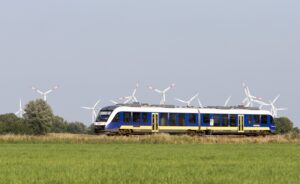
A small set of solar panels beside the railway near Aldershot may look ordinary, but it is doing something groundbreaking. The power from these panels is helping run passing trains.
The project, created by UK start-up Riding Sunbeams, launched in 2019 and shows how clean energy can directly power rail lines. It is the only system of its kind in Britain today.
Solar Trains: Cheaper and Cleaner
Most trains worldwide still run on diesel. Switching to electric lines is expensive and takes time. Solar power offers a flexible alternative, especially in places where local electricity grids cannot support rail upgrades.
However, that is not the only challenge. Solar power uses direct current (DC), while trains running on overhead wires need alternating current (AC). Engineers are now testing converters to bridge this gap, which could speed up solar-powered rail adoption.
Smarter Ways to Electrify Tracks
New technology is also helping with traditional rail electrification. In Yorkshire, software designed by the University of Huddersfield created a digital twin of a railway junction to plan overhead wiring. This reduced costs and allowed high-speed trains to run safely from day one.
Future Freight: No Locomotives Needed?
Some start-ups are taking bold new paths.
- Nevomo in Poland has built a magnetic propulsion system that moves freight wagons without locomotives. Each wagon has magnets and can start, stop, and travel independently.
- Parallel Systems in the US is developing battery-powered freight wagons, designed to work more like delivery trucks – short trips, fast movement, and greater flexibility.
Both companies say their systems could boost freight capacity and cut emissions. But they must prove the technology works at scale.
🚄 The Outlook
Rail experts say electrification is now the preferred choice for new rail projects. Solar, batteries, and magnetic systems could speed up the shift from diesel and make rail greener and cheaper.
But like many emerging technologies, the big test will be commercial success. As one industry leader says:
“These solutions can work — the challenge is making the business case.”